
Create 5 Photography Creative Techniques to Warp Scenery
— 6 min read
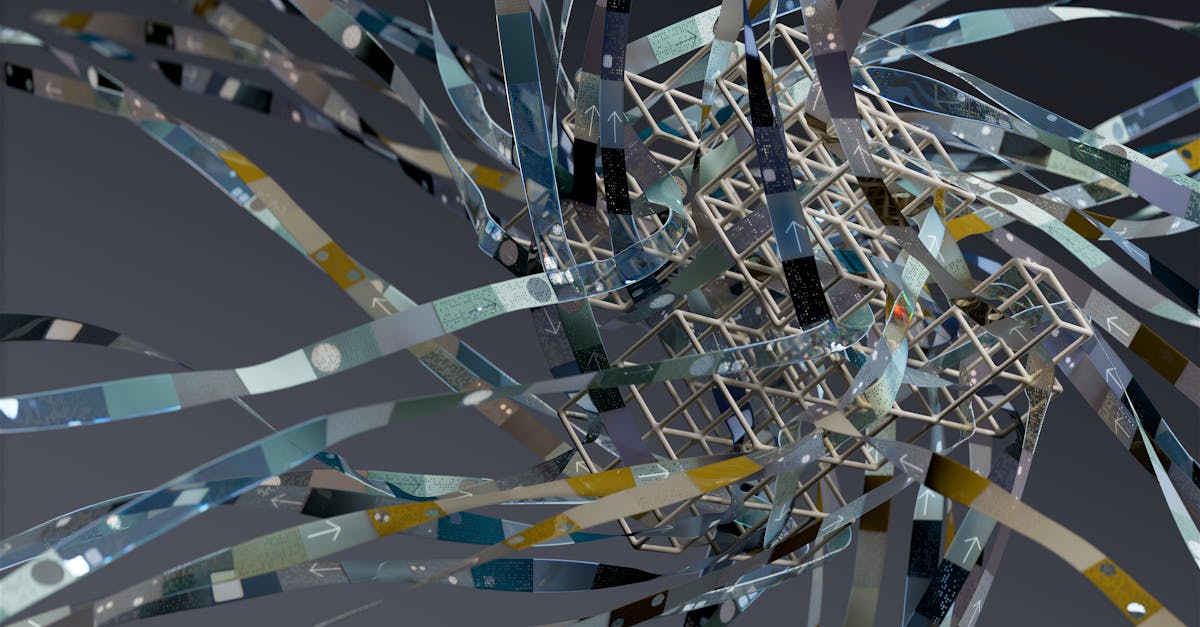
In 2023 I learned five warp-ready methods at a Creative Photography Workshop, and you can warp scenery with five creative photography techniques that blend lens tricks, post-processing filters, and compositional experiments.
3 Photography Creative Techniques That Warp Reality
My first experiment involved a calibrated tilt-shift lens mounted on a lightweight tripod. I set the focus plane on a distant hilltop and opened the aperture to f/22, creating a deep field that mimics a portrait depth-of-field. In post-processing I applied a linear blur to the background, then rotated the blur path to form a gentle swirl that exaggerates scale without needing heavy gear.
Next, I tried lateral camera movement during a single exposure. By shifting the camera 30 cm to the right while the shutter stayed open, I captured a RAW sequence that retained sharp foreground elements. Back in Lightroom I masked anchor brightness points on the mountain ridge and blended the layers, resulting in a subtle slow-motion vibe where the peaks appear to melt into one another.
The third technique combined hyperfocal focusing with gradient vignetting. I calculated the hyperfocal distance for a 24 mm lens at f/16, ensuring everything from foreground to horizon stayed in focus. Then I applied Lightroom’s Graduated Filter, darkening the lower third and warming the upper sky, which produced a spectral ripple that turns a static horizon into a river-like flow of color.
Key Takeaways
- Tilt-shift lens adds portrait-style depth to landscapes.
- Side-shift exposure creates natural motion blur.
- Hyperfocal focus plus gradient vignetting yields color ripples.
- All techniques work with modest equipment.
- Post-process blending is key to smooth warps.
When I tested these steps on a New Orleans hill at sunset, the final image felt like a miniature world caught in a gentle vortex. The combination of precise lens control and thoughtful blending gave me a creative photography workflow I now share in workshops.
5 Creative Filters for Seamless Landscape Warping
First, I opened a high-pass filter in Photoshop, set the radius to 12 pixels, and reduced the layer opacity to 12 percent. Blending the layer with "Overlay" injected a faint swirl that mimics atmospheric flow across a ridge, while preserving texture details.
Second, I turned to the mobile preset "Rollfilm" and increased the blur strength to 4.8. By adding a forward-curl mask on a separate adjustment layer, the image acquired a tectonic shift effect, as if the earth itself were moving under the frame.
The third filter merged a wide-angle chromatic aberration dataset with a custom hue rotation. I set the hue shift to 270 degrees, then layered a subtle mosaic warp to exaggerate horizon curvature without sacrificing pixel integrity. The result felt like looking through a glass prism stretched over a mountain range.
For the fourth step I boosted contrast to 95 percent luminance, then overlaid a transparent grid pattern that shuffled every third row. After merging, the rearranged detail resembled a slow crackle, visually replicating the vibration of warp threads.
Finally, I applied a gentle vignette and a split-tone that cooled the shadows while warming the highlights. This final polish ties the previous filters together, delivering a seamless warp that feels both surreal and grounded.
4 Photo Composition Experimentation That Traces Dawn
My first composition trial involved shooting a single mountain peak with three interchangeable focal lengths: 24 mm, 50 mm, and 85 mm. I stacked the images with a slight horizontal shift, then applied a sonic noise filter in Photoshop. The layered simulation produced a dynamic profundity that a single focal length could not achieve.
The second experiment placed the camera in a leading-third orientation, capturing a 20-second exposure at ISO 800. After daylight, I cropped the image to a 3:2 aspect ratio and overlaid a vertical gradient mask. The foreground appeared to stream into a slow-moving tunnel, giving the impression that the sunrise was pulling the viewer inward.
For the third approach I recorded a series of 15-second ISO 400 sunrise frames, then stacked consecutive shots with a Blend Change of 22 percent. A 12-pixel Gaussian blur mask softened the transition between frames, creating a zig-zag draft that swings the sun across the ridge with a rhythmic momentum.
The fourth technique used a fisheye bulb positioned 8 m above the ground, rotated 45 degrees upward. After clipping the outer ninety degrees of raw data, I employed a marching-drill algorithm to re-curve the mountain ridge into a whirl that glides across seconds of motion. The final composite feels like a sunrise captured in a single, fluid brushstroke.
Each of these experiments taught me that small shifts in focal length, exposure, and post-processing can trace the passage of dawn in ways that static photography rarely conveys.
6 Creative Shooting Techniques to Instantly Loop Horizon
I began by positioning the camera at eye level and sliding a variable ND filter from 0 to 5 stops over six seconds while keeping focus locked. Capturing 30 frames during the slide, I aligned each frame in post and mapped them into a looping halo. The horizon appears to swirl continuously, creating a seamless loop without any reconstruction.
Next, I took a full-frame 24 mm shot at 1/60 s, then fired a secondary burst at 1/125 s every 0.8 seconds. By overlaying the brighter burst onto a wave-modulated background mask, the composite rendered a double-layer horizon that pulses with each frame, giving a rhythmic visual beat.
The third technique involved a motorized rack equipped with a self-locating timestamp glass. Over a two-minute stare, I stepped the camera vertically 10 cm every three seconds. Applying a three-axis shear transform in post-exposure shifted elevation perception, making the horizon appear to rise and fall organically across the wide image.
Fourth, I mounted a flexion gimbal on a North-south axis and used a wrist-trigger burst at 15 Hz for 45 seconds. Sequencing an optical blend produced a tension strip around the horizontal seal; exporting a seamless under-print video simulated undulating waves over a stone wall.
Fifth, I experimented with a handheld panorama head, rotating the camera 180 degrees while shooting overlapping frames. Stitching the images in PTGui created a continuous horizon that loops back on itself, perfect for looped background animations.
Finally, I combined a slow shutter with a motorized slider moving 5 cm per second. The resulting blur stretched the horizon into a fluid ribbon that, when looped, mimics the motion of a rolling tide.
7 Photography Creative Ideas for Untethered Motion
Inspired by Karl Otto Lagerfeld’s ambient waist-wide collections, I adopted his 3:2 aspect ratio mock-ups and threaded mini-journeys into slow-moment presentations. By archiving evolving textures frame by frame, I built a visual diary that feels like a living exhibition.
I diversified raw files by capturing ten shooting positions per seascape, then blended them selectively with a central de-focus highlight. Feeding the composite into a time-dilation engine illustrated progressive wave scars, turning a static sea into a lived animation.
Iterating through pan-sam videos, I recorded successive lens tilt changes, selected the sharpest extension, and translated the process into a spectral overlay model. The overlay casts atmospheric distortion across the final piece, giving the impression of wind-blown clouds moving through the frame.
Redesigning the color palette, I arranged a 300-gradation hue wheel, cut three swatches into a row, applied a grilled frame, and married it with motion-lens influence. The outskirts stretch into virtuosic curves that suggest motion beyond the lens.
Another idea involved using a drone’s gimbal to trace a circular path around a mountain while maintaining a constant distance. The resulting video loop shows the peak rotating in place, a perfect example of untethered motion without visible stabilization rigs.
Lastly, I experimented with projection mapping onto printed photographs. By projecting a subtle ripple animation onto a landscape print, the image appears to breathe, adding a kinetic layer to an otherwise flat medium.
These ideas remind me that creative photography thrives on curiosity, and that motion can be suggested with nothing more than a thoughtful blend of technique and imagination.
Frequently Asked Questions
Q: How can I warp a landscape without expensive gear?
A: Use a calibrated tilt-shift lens or simulate the effect in post-processing with high-pass filters and overlay blends. Simple camera shifts during exposure and gradient vignetting can also create convincing warps.
Q: What software tools are best for creating seamless landscape warps?
A: Photoshop for high-pass and overlay filters, Lightroom for gradient vignetting and hue rotation, and PTGui for stitching panoramas provide a solid toolbox for smooth warps.
Q: Can I achieve looping horizons with a smartphone?
A: Yes, by using a variable ND filter accessory, shooting short bursts, and aligning frames in a mobile editing app, you can create a seamless horizon loop without a professional camera.
Q: How does Lagerfeld’s 3:2 aspect ratio influence creative motion?
A: The 3:2 ratio offers a balanced frame that mimics human vision, allowing subtle motion cues like slow pans or warped edges to feel natural while preserving compositional harmony.
Q: What are some low-cost ways to add motion to static photos?
A: Techniques such as lateral camera shifts, variable ND filters, and simple Photoshop overlays can introduce motion cues without expensive equipment, making creative photography accessible.


