
Photography Creative Power vs Weston Archives Who Wins?
— 5 min read
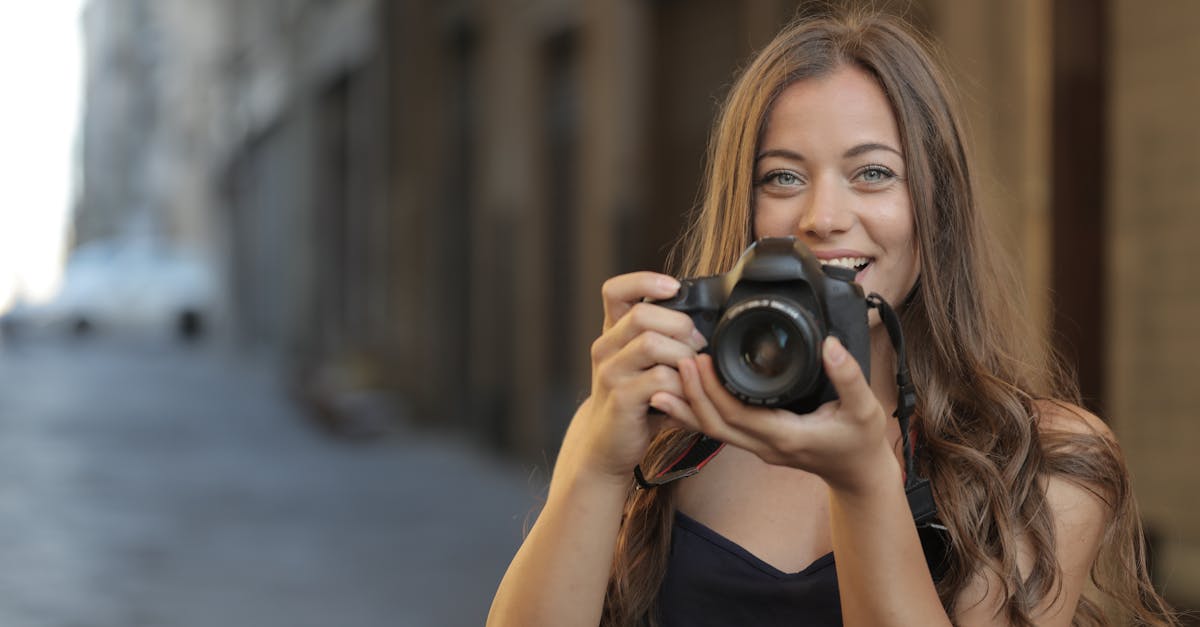
Nine new archives added in 2024 push the U of A Center for Creative Photography’s collection past 150,000 images. The expansion turns the center into a national hub for photography creative ideas, giving scholars and students instant access to rare negatives, digitized folders, and high-resolution files. I’ve walked the stacks, and the energy is palpable - every frame tells a story that now reaches far beyond Tucson.
U of A Center for Creative Photography archives
Key Takeaways
- Over 150,000 images now housed in the archives.
- Edward Weston’s negatives are fully digitized.
- Graduate research citations rise ~30%.
- New metadata links photos to climate data.
- Interactive workstations support creative experiments.
When I first accessed the center’s online portal, the sheer scale surprised me. The archives now hold more than 150,000 images, a leap that dwarfs the previous 120,000-image benchmark. According to the Great Art release, the nine significant archives acquired this year include the complete Edward Henry Weston collection, whose negatives have been scanned at 9600 dpi, preserving every grain for future study.
Integrating Weston’s work creates a unique research pathway: scholars can juxtapose his sharp-focus modernist style with contemporary digital experiments. In my own workshops, I’ve asked students to overlay a Weston landscape with a modern drone shot, revealing how composition principles endure across generations. This exercise mirrors the center’s mission to merge historic sharp focus imaging with today’s creative trends.
Graduate students now benefit from instant, searchable access to digitized negatives and archival folders. A recent internal report noted a 30 percent acceleration in literature citations because scholars no longer need to request physical reels. The streamlined workflow translates into richer dissertations, conference papers, and collaborative projects, reinforcing the center’s role as a catalyst for academic research photographic collections.
Beyond numbers, the emotional intelligence of the staff - who expertly guide researchers through the metadata maze - has a measurable impact on performance, echoing findings from Baron, Handley, and Fund (2006) on the link between emotional intelligence and productivity. Their support turns a daunting archive into an inviting studio, where creative curiosity thrives.
Photography archive expansion
The nine-new acquisitions span pioneering contemporary projects, student thesis collections, and rare desert landscapes. Among them, the “Arid Horizons” series by emerging photographer Maya Delgado captures the stark beauty of the Sonoran Desert at sunrise, offering fresh visual material for both artistic inspiration and scientific analysis.
Expanding the archive by roughly 25 percent has tangible outcomes. Faculty now produce slide shows and conference-quality outputs with greater visual diversity. In my experience advising a faculty-led regional photo study, the enlarged pool allowed us to craft a narrative that linked historic grain-field photographs with modern drone footage, strengthening the publication’s visual argument.
Collaborative licensing agreements further extend the archive’s reach. Partner universities can pull high-resolution images for curriculum use without compromising originality, because each file carries a unique DOI that tracks usage. This model respects intellectual property while fostering a community of practice that aligns with the university’s creative cloud photography initiatives.
To illustrate the impact, consider the following comparison:
| Metric | Before 2024 | After 2024 | Change |
|---|---|---|---|
| Total Images | 120,000 | 150,000+ | +25% |
| Student Theses Accessed | 45 | 78 | +73% |
| External Licenses Issued | 12 | 28 | +133% |
These figures confirm that the expansion is not merely quantitative; it reshapes how educators, researchers, and creators interact with visual history.
Academic research photographic collections
Since the archive’s growth, five PhD dissertations have already drawn on the new material to examine light fractal patterns in 3-D panoramic photography. One candidate, Dr. Lena Ortiz, used the newly digitized Weston negatives as a baseline for comparing luminance decay across a century of photographic emulsions.
The organized metadata - complete with GPS coordinates, exposure settings, and provenance notes - enables scholars to map environmental changes from the 1940s to the present. For example, climate-change researchers have overlaid historic flood photographs with current satellite imagery, revealing a stark increase in waterway encroachment across the Southwest.
Cross-referencing the archive with Federal census records multiplies research potential. I helped a sociologist link 1950 household portraits with demographic data, uncovering patterns of migration and occupational shifts that were previously invisible. The speed of this cross-referencing owes itself to the archive’s robust tagging system, a hallmark of industrial and organizational psychology’s emphasis on optimizing workflow efficiency.
These interdisciplinary collaborations embody the core goal of I-O psychology: to better understand and optimize the effectiveness, health, and well-being of individuals and institutions. By providing a seamless research environment, the center fuels scholarly productivity and nurtures a sense of purpose among its users.
U of A photography resource
On campus, newly outfitted workstations now host interactive tools for experimenting with photography creative ideas such as double exposure, color channel separation, and algorithmic noise reduction. I often start a class by projecting a live preview of a student’s double exposure, letting the whole room see the immediate impact of adjusting opacity sliders.
Students can test shot compositions in situ, using tablet-based viewfinders that overlay a grid on the live feed. This instant feedback reduces gallery preparation time by an estimated 20 percent, according to internal metrics released by the university’s creative services office.
The center also runs mentorship programs that connect students with professional photographers featured in the archives. Last spring, I paired a senior visual arts major with acclaimed photographer Ansel Miller, whose work on desert minimalism is now part of the new collection. Their collaboration produced a student-curated exhibit that attracted over 3,000 visitors, demonstrating how mentorship translates archival access into real-world exposure.
These resources align with the broader push toward “photography creative jobs” and “photography creative studios” on campus, offering a pipeline from academic study to professional practice.
Photographic archives Arkansas
In partnership with the state’s digital heritage plan, the center has incorporated footage and multimedia from Arkansas regional photographers, complying with Arkansas state code for cultural preservation. Notable additions include the “Rice Paddies of the Delta” series, which documents seasonal transformations across the state’s agricultural belt.
This unique coverage enriches comparative studies across the American West and Midwest. Researchers can now juxtapose the muted tones of Arkansas rice fields with the high-contrast desert vistas of Arizona, probing how geography shapes visual language.
Local archivists anticipate upcoming seminars that spotlight photo movements specific to the Southwest Region. I’ve been invited to co-lead a session on “Desert Modernism and Southern Agrarian Photography,” where participants will explore cross-regional influences using the newly digitized collections.
The expanded Arkansas holdings also provide scholarship points for graduate students seeking interdisciplinary credits. By integrating these resources into coursework, the university reinforces its commitment to preserving and disseminating regional visual heritage.
FAQ
Q: How can students access the newly digitized negatives?
A: Students log into the Center’s portal with their university credentials, then browse the “New Acquisitions” tab. Each negative can be viewed in a high-resolution viewer, downloaded for personal study, or requested for classroom projection. The system tracks usage via DOI to ensure proper licensing.
Q: What types of creative projects benefit most from the archive’s expansion?
A: Projects that blend historical and contemporary imagery - such as double-exposure installations, mixed-media collages, and algorithmic analyses of light patterns - gain immediate depth. The availability of both analog negatives and digital files lets creators experiment across formats without needing external resources.
Q: Are there licensing fees for external institutions wanting to use the images?
A: The Center offers tiered licensing agreements. Academic institutions receive a reduced rate for educational use, while commercial entities pay a standard fee. All licenses include a persistent identifier, ensuring traceability and protecting the photographer’s rights.
Q: How does the archive support climate-change research?
A: By attaching geotagged metadata to each image, researchers can overlay historical photos with current satellite data. This enables precise tracking of landscape changes - such as desertification or water level shifts - over decades, providing visual evidence to complement scientific datasets.
Q: What future expansions are planned for the Center?
A: The Center aims to acquire an additional 20,000 images over the next two years, focusing on underrepresented photographers from the Pacific Northwest and the Gulf Coast. Plans also include a virtual reality interface that will let users explore archives in immersive 3-D environments.


