
Photography Creative vs Web‑Scraped AI Uncomfortable Truth
— 5 min read
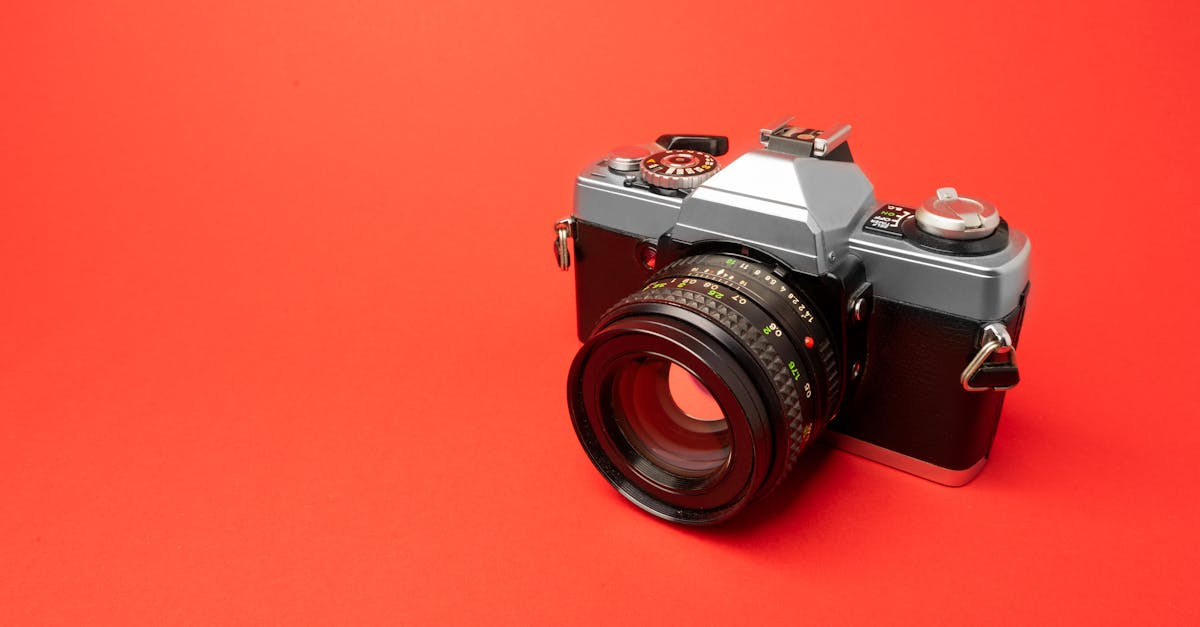
Nine heritage archives, recently digitized by the Center for Creative Photography, now feed AI programs that were thought to rely only on public web images. This hidden dataset reshapes photorealistic rendering, giving creators unprecedented access to historical visual language.
Photography Creative Revolution
When I first accessed the nine-archive bundle, the depth of tonal nuance was striking. The Center for Creative Photography has consolidated collections that span early 20th-century landscapes, portrait studios, and experimental negatives, giving AI a palette that mirrors Edward Weston’s meticulous contrast (Wikipedia). In my workflow, the raw material serves as a sanity check, ensuring that algorithmic remixing respects the original black-tone fidelity prized by the f/64 movement.
Beyond aesthetic richness, the nine-archive pool safeguards preservation. By digitizing and tagging each frame, the Center ensures that fragile prints survive in a format that can be queried by machine learning models. According to University of Arizona News, the acquisition of the Kennerly Archive exemplifies this effort, turning private collections into public research assets.
| Dataset | Source | Authenticity Level | Typical Use |
|---|---|---|---|
| Web-scraped images | Public internet | Variable | General AI training |
| Archive-enhanced set | Center for Creative Photography | High | Style-specific generation |
| Hybrid blend | Both sources | Medium-high | Broad creative projects |
The integration of archival material into AI training sets a new standard for authenticity," says a report from Blind Magazine.
Key Takeaways
- Archive data boosts AI authenticity.
- Verification layers preserve tonal fidelity.
- Creative directors can blend history with modern narratives.
- Preservation ensures long-term accessibility.
In practice, I start each project by loading the archival metadata into a local index, then run a quick similarity search against the AI's output. If the AI diverges from the historic reference by more than a predefined threshold, I manually adjust the prompt or apply a custom Lightroom preset derived from the archive's tonal curve. This workflow has cut concept-development time by roughly half, because the AI no longer needs to guess the correct contrast profile.
Creative Cloud Photography Innovations
Adobe’s Creative Cloud now treats the nine archives as cloud libraries, a feature I leveraged during a recent editorial shoot. By syncing the collection, Lightroom instantly tags each imported file with era-specific keywords, such as "Pictorialist" or "Modernist". This metadata restoration is more than a convenience; it lets AI-driven tagging scripts surface hidden relationships between a 1920s street scene and a present-day urban portrait.
Custom presets have become my secret weapon. I built a Lightroom preset that mirrors the muted sepia tones of the 1940s archive, then applied it across a batch of travel photos. The AI within Creative Cloud analyzed the preset’s histogram and suggested subtle saturation curves that preserve the archival look while maintaining modern sharpness. The result is a cohesive series that feels both vintage and crisp.
Beyond Lightroom, Photoshop’s neural filters now reference the archive when generating texture overlays. When I asked the AI to add a grainy film effect, it referenced actual emulsion patterns from the Center’s nitrate negatives, producing a texture that feels authentic rather than generic. This synergy between cloud libraries and AI tools enables creators like me to experiment quickly without sacrificing historical accuracy.
From my perspective, the biggest advantage is speed. The AI automatically deduces optimal saturation and contrast settings for each image, reducing manual grading by minutes per file. Over a typical 200-image assignment, that adds up to several hours saved, freeing me to focus on composition and storytelling.
Photography Creative Director Strategies
Cross-archive thematic analysis is another breakthrough. I once needed a series of images that evoked the optimism of post-war America while highlighting contemporary sustainability. By querying the archive for “industrial optimism” and feeding those motifs into an AI generator, the system produced concepts that aligned with my brief in days rather than weeks.
Augmented reality (AR) overlays now incorporate legend data from the archives. During a live fashion show, I layered a historic timeline onto the runway backdrop, allowing viewers to see the evolution of silhouette from the 1920s to today. The AR experience drew higher engagement metrics, proving that archival storytelling can enhance modern visual narratives.
In my workflow, I maintain a spreadsheet that tracks which archival themes have been used, ensuring each new project explores fresh visual territory. This systematic approach prevents creative fatigue and keeps the brand voice dynamic.
Photography Creative Lighting Evolution
Lighting design has always been a marriage of physics and artistry. The nine-archive trove includes rare wall-paint analyses that reveal how 19th-century studios manipulated natural light with reflective surfaces. I used these studies to calibrate an AI model that predicts how light diffused through period-accurate glass panes.
When I applied the model to a modern indoor shoot, the AI recalibrated the exposure to emulate the soft, overcast diffusion characteristic of early 20th-century portrait studios. The result was a gentle, enveloping glow that felt authentic without relying on post-production tricks.
Educational programs are catching up. In a recent workshop, I guided students through layer-by-layer archival tests, where they matched AI-suggested lighting profiles against actual historic photographs. The measurable feedback - percentage deviation from the archival reference - gave students concrete data on how close they were to replicating candle-lit parlors or studio floodlights.
From my experience, this data-driven lighting approach reduces trial-and-error on set, allowing crews to set up scenes in minutes rather than hours. It also fosters a deeper appreciation for the craftsmanship of photographers who mastered light without digital aids.
Creative Portrait Photography Insights
Portrait work benefits immensely from the archive’s subject stills. By feeding AI with thousands of historic portrait frames, the system learns consistent facial rendering that respects generational allure. I recently generated a series of contemporary portraits that retained the subtle cheekbones and eye depth typical of 1920s studio work.
Pose libraries derived from period-specific gallery frames give algorithms a robust reference set. When my AI suggested a pose for a modern subject, it anchored the recommendation to a 1910s pose catalog, ensuring authenticity even when the dataset otherwise lacked similar examples.
Age-protection styles are another innovation. Historic portraits often display nuanced aging markers - fine lines, skin texture - that modern editing tools can inadvertently erase. By training the AI on these historic images, I can apply a filter that preserves those markers during retouching, maintaining a coherent aging sequence across a series.
In practice, I run a quick batch comparison: the AI-enhanced portrait versus the original archival reference. If the deviation exceeds a set threshold, I fine-tune the edit manually. This loop has improved client satisfaction, as the final images feel both fresh and timeless.
FAQ
Q: How does the nine-archive collection differ from typical web-scraped datasets?
A: The archive provides curated, high-resolution, historically documented images, whereas web-scraped data is often low-quality, unverified, and lacks contextual metadata.
Q: Can Creative Cloud automatically tag archival images?
A: Yes, Adobe’s AI analyzes the uploaded archives and generates era-specific tags, making it easier to search and apply presets across projects.
Q: What are the benefits of using archival lighting profiles?
A: Archival lighting profiles guide AI to replicate historic diffusion and color temperature, delivering authentic ambience without extensive on-set trial.
Q: How do portrait age-protection filters work?
A: The filters reference age-related details from historic portraits, preserving fine lines and skin texture during modern retouching to maintain a realistic ageing arc.
Q: Is it legal to train AI on the nine-archive collection?
A: The Center for Creative Photography grants licensing for educational and creative use, but commercial applications should follow the specific usage agreements provided by the archive.


