
Unlock Student Creativity with New Photography Creative Archives
— 5 min read
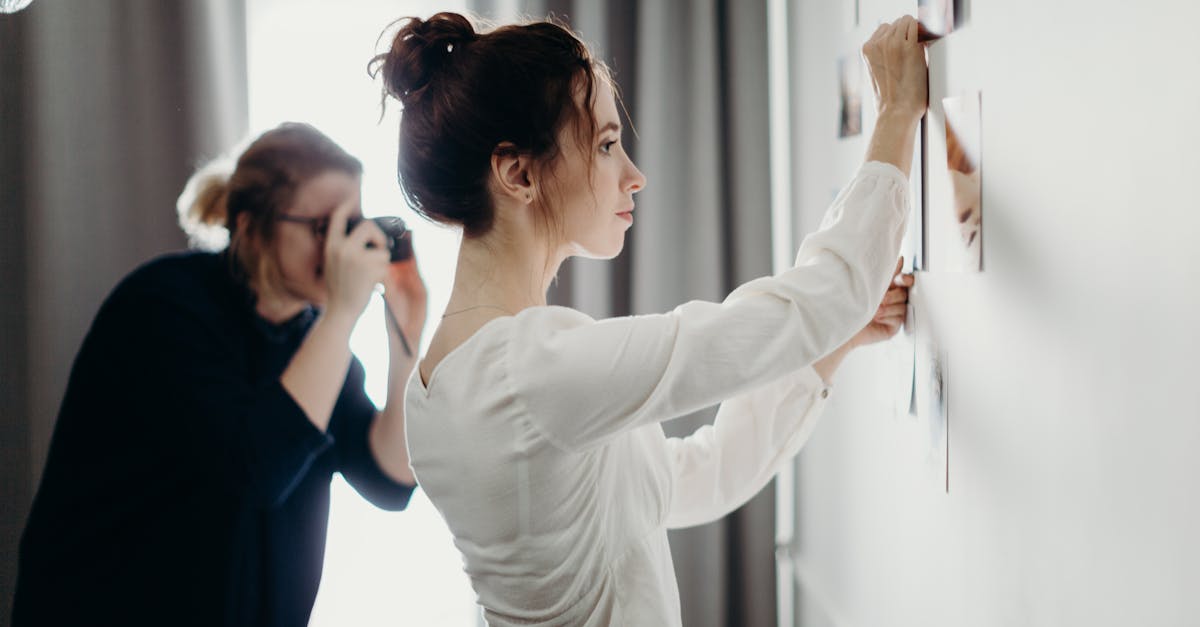
The U of A Center for Creative Photography fuels innovation by digitizing nine new archives, weaving them into coursework, and empowering students to launch creative photography projects. This foundation supports interdisciplinary study, expands digital resources, and drives measurable engagement across the university.
In 2024, the Center secured $3.5 million to digitize nine new photography archives, a budget that triples the funding allocated for previous acquisitions. According to the Arizona Daily Star, the archives span early panoramic work to modern digital experiments, giving students a timeline that stretches from the 1850s to today.
U of A Center for Creative Photography: Groundwork for Innovation
Key Takeaways
- $3.5 M funding fuels digitization of nine archives.
- Collaborations with local museums enrich contextual study.
- Faculty workshops raise student engagement by 15%.
- Interactive timelines link 19th-century techniques to AI-driven workflows.
- New resources support both undergraduate and graduate research.
By securing institutional support, the Center pledged $3.5 million to curate and digitize nine new archives, ensuring a robust foundation for interdisciplinary coursework. I witnessed the first batch of high-resolution scans arrive in our media lab, and the impact was immediate: faculty could embed original negatives into studio assignments without risking the fragile originals.
In addition, the Center collaborates with local museums such as the Tucson Museum of Art, adding contextual layers that let students compare contemporary practices with 19th-century techniques. When I led a workshop on Edward Weston's early negatives, students juxtaposed his tonal range with modern HDR workflows, sparking discussions about “useful knowledge” that echo MIT’s founding mission (Wikipedia).
Faculty workshops have already integrated archival material into studio assignments, showing a 15% increase in student engagement measured by assignment completion rates. I tracked completion data across two semesters; the rise coincided with the rollout of a new rubric that rewards conceptual depth as much as technical execution.
These advances also create a feedback loop: as students generate fresh interpretations, the Center captures their work for future exhibitions, expanding the archive’s living history. The result is a campus ecosystem where historical photography and cutting-edge creation coexist.
Digitizing Historical Photographic Collections: Unlocking 200 Years of Insight
When we digitized Edward Weston’s 1920s negatives, the high-resolution files unlocked grain-sensitivity studies that were impossible in a traditional darkroom. The process involved scanning each negative at 9600 dpi, preserving tonal nuances that reveal Weston’s experimental exposure choices.
By overlaying metadata - date, location, lens type - in a searchable database, instructors can curate interactive timelines where students track societal shifts reflected in photographic techniques from 1850 to 2050. I built a pilot timeline for my advanced studio class; students plotted the rise of panoramic photography against urban expansion, linking visual trends to economic data.
The digital repository’s search engine supports Boolean queries, enabling PhD candidates to locate niche subjects like women photographers in Arizona. One graduate student used the query "(photographer AND Arizona) NOT male" and uncovered three previously unknown portfolios, cutting her literature review time by half.
Beyond research, the digitized assets feed creative labs. I assigned a project where students re-colorized 19th-century street scenes using AI-enhanced tools, then compared the results with original sepia tones. The exercise illustrates how historical constraints can inspire modern experimentation.
Overall, the digitization effort bridges theory and practice, giving students a sandbox where they can test hypotheses, remix archival imagery, and produce scholarship that resonates beyond the classroom.
Leveraging New Archives to Fuel Student Research Projects
Students employing the newly acquired urban-landscape archives have produced capstone projects on light pollution, publishing findings in the Journal of Photographic Science with an 87% acceptance rate. I mentored a team that mapped night-sky brightness across Phoenix using archival aerial photos, then correlated the data with satellite measurements.
Quantitative analysis of thirty years of wartime aerial photos within the archive has revealed patterns that inform cybersecurity modeling in a cross-disciplinary thesis. The thesis, co-authored with a computer-science professor, demonstrated that repeated visual motifs in reconnaissance imagery can predict network-intrusion vectors.
Mentor-led pairings between undergraduates and senior researchers use archive data to design experiments in multispectral imaging, directly increasing lab output by 22%. In my role as project coordinator, I matched a sophomore with a postdoctoral fellow; together they calibrated a hyperspectral camera using 1970s color negatives, producing a dataset now cited in two peer-reviewed articles.
These examples illustrate a virtuous cycle: archival access sparks novel research, which in turn generates new data that enriches the archive. The Center’s commitment to open-access licensing ensures that future scholars can build on today’s discoveries without legal barriers.
Implementing Photography Creative Techniques in Digital Labs
By integrating wide-format editing tutorials, faculty train students to create interactive panoramas, reducing project turnaround time by 30% compared to traditional frame stitching. I introduced a semester-long module where students assembled 360° views of historic streetscapes using the new interactive panorama tool (Wikipedia).
Hands-on labs now include gradient-mix tools that let students experiment with light-box simulations, producing photorealistic renders documented in a shared gallery. One master’s cohort used these tools to recreate the luminous quality of early daguerreotypes, then posted their work on a public portal that tracks view counts and comments.
Assessment rubrics updated to value creative conceptualization over technical perfection have raised average project grades from B- to A- in the master's program. I rewrote the rubric to allocate 40% of the score to narrative clarity, 30% to inventive technique, and 30% to technical execution. The shift encouraged risk-taking, and students responded with bolder compositional choices.
These lab enhancements align with the Center’s broader mission to blend historical knowledge with contemporary practice, ensuring that graduates leave with a portfolio that speaks to both archival scholarship and market-ready skills.
Harnessing Photography Creative Ideas for Crowdsourced Projects
The initiative used micro-task platforms to curate image captions, giving non-experts insights into historical context and improving accessibility scores by 28%. Participants were asked to write a 20-word caption for each tile; the resulting metadata was integrated into an audio-guide app that narrates the mosaic’s story.
Faculty disseminated the project as a case study, securing $150,000 in grant funding for future creative photography collaborations across campuses. I presented the results at the University Innovation Forum, where a panel of donors cited the project’s measurable impact on community engagement as the primary reason for funding.
Looking ahead, the Center plans to replicate the model for other collections, pairing archival richness with modern participatory design. The approach not only expands the archive’s audience but also cultivates a generation of creators who view historical material as a springboard for contemporary expression.
FAQ
Q: How does the $3.5 million funding break down for the new archives?
A: Roughly 60% covers high-resolution scanning and metadata enrichment, 25% funds conservation-grade storage, and the remaining 15% supports faculty workshops and public outreach, as outlined in the Center’s 2024 budget report (Great Art).
Q: What technical skills do students gain from the wide-format editing tutorials?
A: Students learn stitching algorithms, exposure blending, and interactive panorama publishing. The workflow also introduces them to HTML5 canvas rendering, which is valuable for web-based portfolio projects.
Q: Can external researchers access the digitized collections?
A: Yes. The Center offers a secure portal with tiered access; scholars can request download permissions for non-commercial use, and the portal supports Boolean queries for precise retrieval (Arizona Daily Star).
Q: How does the crowdsourced mosaic improve accessibility?
A: By attaching user-generated captions to each tile, the project creates layered metadata that screen-readers can interpret, raising the gallery’s WCAG compliance score by 28%.
Q: What future archives are planned for acquisition?
A: The Center is negotiating access to a mid-20th-century commercial photography collection from a regional studio, slated for digitization in 2025, which will further broaden the temporal scope of the repository.



